How to choose a tailor in Hoi An and avoid tourist traps
Hoi An has several hundred tailor shops within a few streets, and most visitors have an afternoon, not a week, to choose one. The good news is that a shop can be judged in about ten minutes if you know what to look at. The rest of this guide is that ten-minute check, followed by the questions to ask before you pay a deposit and the signs that mean you should keep walking.
Start by ignoring the sign
Every shop says it has the best tailors, the best fabrics and the fastest service. Every shop has a wall of glowing printed reviews. None of that tells you anything, because every shop has it. The signs that matter are the ones a shop cannot fake in a day: the garments on the rack, the people in the room, and the answers to a few direct questions.
The ten-minute check
Pick up a finished garment and turn it inside out. Look at the seam allowances: are they generous and neatly finished, or trimmed to nothing? On a jacket, look at the lining: is it sewn in cleanly, or puckered? On a shirt, look at the collar points and the buttonholes. Does a stripe or check match across the pocket and the seam? A shop that is proud of its work will hand you the garment. A shop that steers you back to the catalogue has a reason.
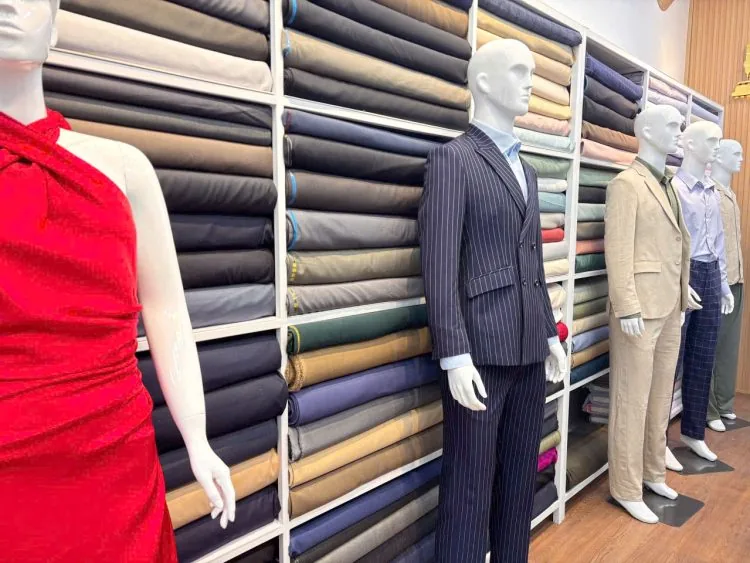
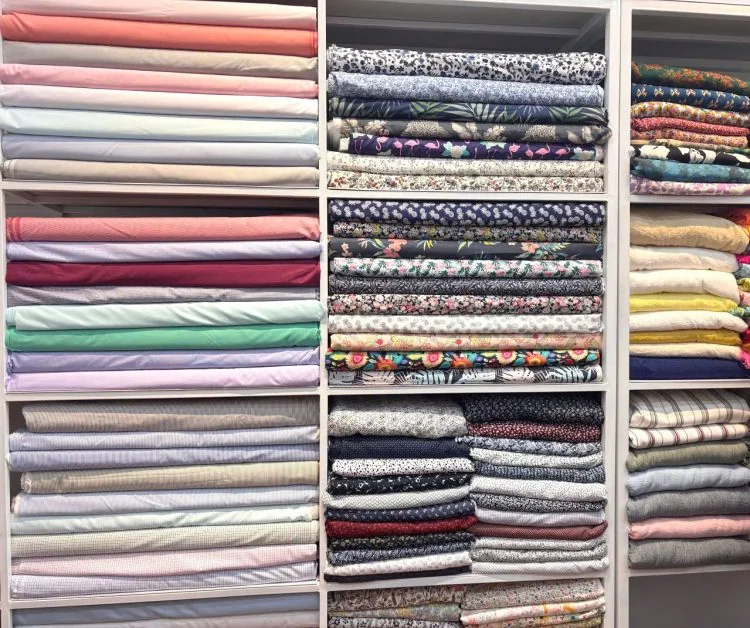
Look at the fabric wall. A shop that sews its own clothes stocks the cloth it sews. A shop with a few token bolts and a promise to "get anything" will send a runner to the cloth market and quote you a price with a margin on top. Ask to feel a few fabrics and ask the composition. Have a look at the fabric library first so you know what you are touching.
Ask where the garment is made and who adjusts it. Many Hoi An shops are fronts for workrooms elsewhere in town, and that is not necessarily a problem; what matters is whether the person who sewed your jacket can see it on you at the fitting. "Made in our workroom upstairs" and "made at our factory on the edge of town" are both reasonable answers. "Don't worry about it" is not.
Watch the first conversation. A good shop asks questions before it quotes: where will you wear it, when do you leave, what do you usually wear. A shop that quotes a price and reaches for the tape measure before you have finished your sentence is optimising for volume. Pressure to decide now, a special price that expires today, or a free gift for ordering five items are all signs of the same thing.
Read reviews from the last three months, with photos. Hoi An shops change hands and change staff. A shop that was excellent two years ago may not be now. On Tripadvisor or Google, filter to recent reviews and look for photographs of finished garments on real people. Five recent photos tell you more than five hundred stars.
Three questions before you pay a deposit
What is the total price for this garment in this fabric, including the fitting adjustments? Have it written on the receipt with the fabric name.
When is the first fitting, and when can I collect? Agree the dates and times. If you leave Hoi An before the collection date, ask now how that will be handled, not later.
What happens if I am not happy at the fitting? A reasonable shop will adjust until it fits and, if it cannot, remake or refund. An unreasonable one will tell you it looks great.
The three tiers of Hoi An tailoring
It helps to know which kind of shop you are standing in. Stalls in the cloth market and small shops nearby are the cheapest and fastest; they make simple garments well and complex ones less reliably. Mid-range shops with their own premises and workrooms charge more and spend more time on fit and finish; most of the well-reviewed shops in town are here. A handful of high-end houses charge several times the mid-range price for imported fabric and canvassed construction. The price list shows what each tier typically charges by garment, so you can tell whether a quote is in the right range for the shop you are in.
Cheap is not the same as bad, and expensive is not the same as good. A shirt from the cloth market can be perfectly fine. A suit from a shop that cannot explain its construction may not be, at any price.
When to walk away
- You are not allowed to inspect a finished garment.
- The fabric composition cannot be stated or written down.
- The price changes when you ask for it in writing.
- A suit is promised in a few hours with no fitting.
- You are told the fitting is unnecessary because the measurements were "perfect."
- Someone on the street walked you to the shop and is waiting outside.
None of these means the shop is dishonest. All of them mean you cannot tell, and in a town with hundreds of alternatives, you do not have to guess.
Order one thing first
The single most useful habit is to order one garment, see it at the fitting, and only then add more. A shirt or a pair of trousers is quick, often the same day, and shows you everything about how the shop works: whether the measurements were taken with care, whether the fitting is a real conversation, whether the finishing is clean. If it is, order the suit. If it is not, you have lost one afternoon and the price of a shirt.
About the shop behind this site
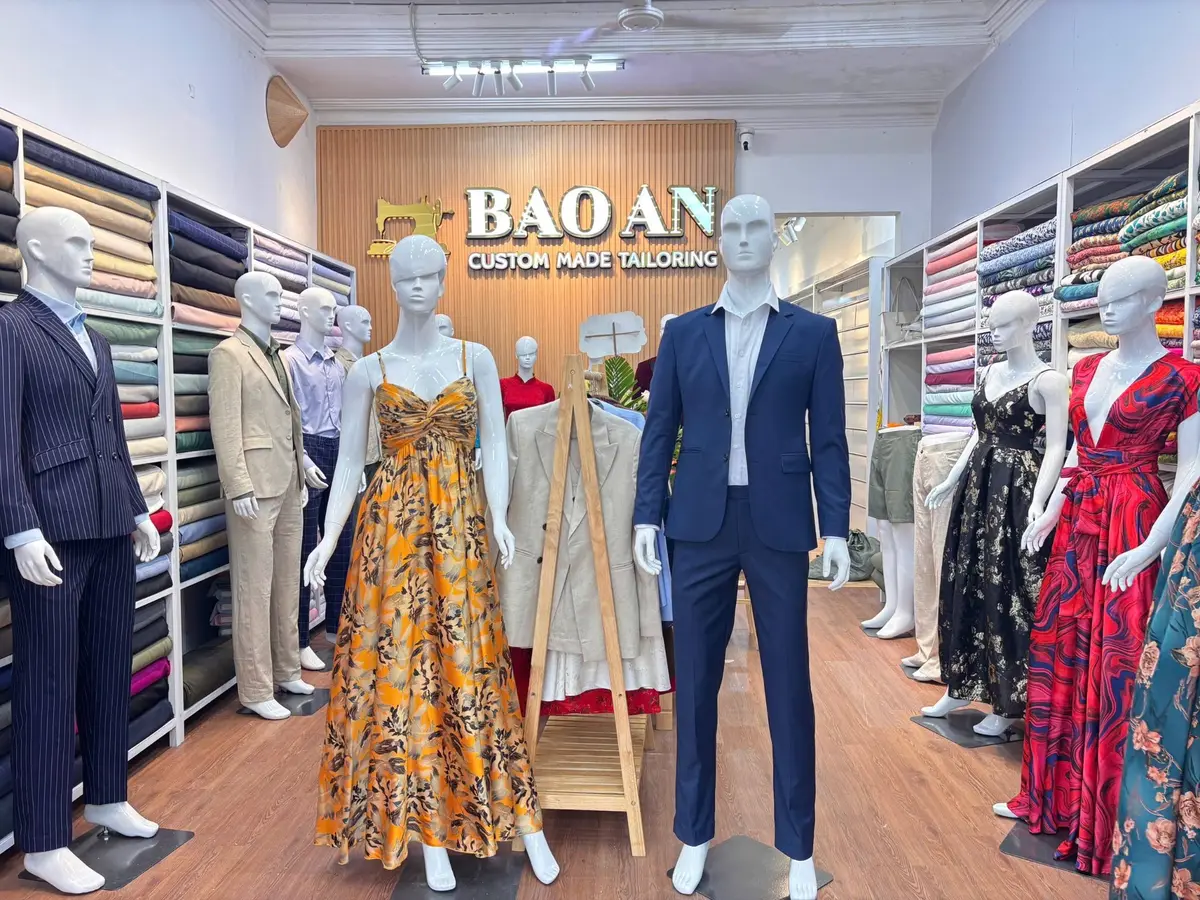
Hoi An Clothes Shop is a catalogue and guide site; the garments shown here are made by Bao An Tailor, a mid-range shop with two ateliers at 341 Nguyen Duy Hieu and 2/6 Le Loi. Apply the check above to Bao An as you would to anyone else: ask to see finished garments, ask where they are sewn, read the recent reviews on Tripadvisor. The Hoi An tailor guide sets out the whole process from choosing a style to getting the clothes home.
FAQ
Is it safe to get clothes made in Hoi An?
Yes, for most visitors. The risks are a poor fit, a fabric that is not what was promised, or a rushed job. All three are avoidable by checking the shop's finished work, agreeing the fabric in writing and insisting on a fitting.
Should I use the tailor my hotel recommends?
Treat it as one option. Hotels and guides often earn a commission, which is not a problem in itself, but it means the recommendation is not neutral. Judge the shop the same way you would any other.
How do I know if the clothes are made in the shop?
Ask directly, and ask who does the fitting adjustments. A shop with its own workroom can usually show you, or at least describe it. Subcontracting is common and not always bad, but adjustments take longer.
What is the biggest mistake first-time visitors make?
Ordering too much on the first afternoon, from the first shop they walk into, without seeing a finished garment. Order one piece first, see the fitting, then decide.