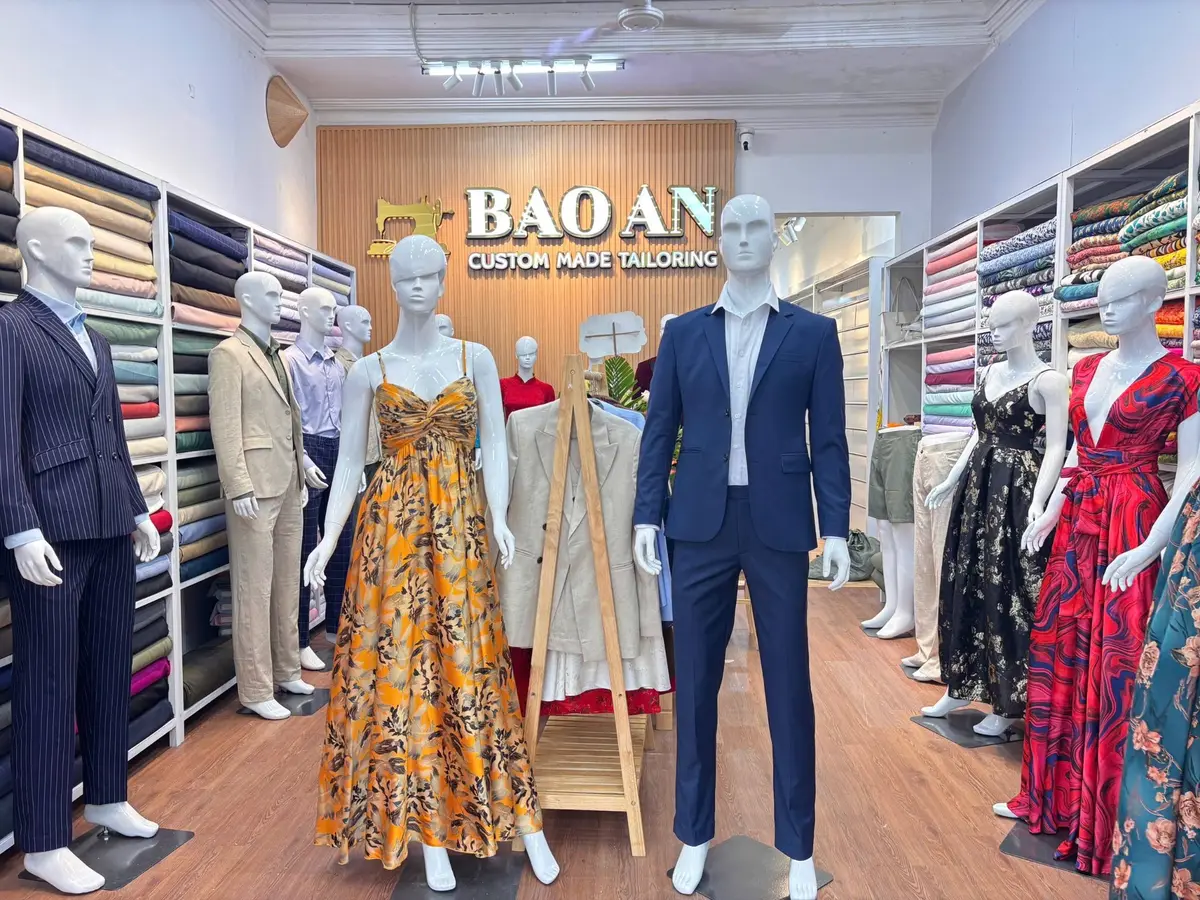
Is a suit from a Hoi An tailor worth it? An honest answer
People fly to Hoi An for a suit, and people fly home from Hoi An with a suit they never wear. Both are common, and the difference between them is not the town or the price. It is three decisions made in the first ten minutes in the shop. This guide gives an honest answer to whether a Hoi An suit is worth it, and sets out those three decisions.
The short answer
For a made-to-measure suit, yes, if you choose a wool or wool-blend cloth, allow time for two fittings, and understand what construction you are paying for. Under those conditions, you get a suit cut to your body for a price that would buy an off-the-rack suit, sometimes a poor one, at home. Without them, you get a suit that looks right in the shop mirror and wrong everywhere else.
What you are comparing
A made-to-measure suit at home, from a tailor who adapts a pattern to your measurements, is a significant purchase in most countries. An off-the-rack suit is cheaper but fits the average body, which is nobody. A Hoi An shop offers made to measure as its standard service, in a few days, for a price that sits well below off-the-rack at home for comparable cloth. The price list shows what Hoi An's three tiers of shop typically charge, from the cloth market to the high-end houses.
The honest caveat is construction. A made-to-measure suit at a good tailor at home will usually be half or full canvas: a layer of canvas stitched through the chest and lapel so the jacket moulds to you over time. Most Hoi An shops at mid-range prices make fused jackets: the interlining is glued to the cloth, which is faster and cheaper and holds its shape well for years of occasional wear. The high-end houses in Hoi An offer canvassed work at a higher price. Neither is wrong. They are different products, and you should know which you are buying.
Decision one: the cloth
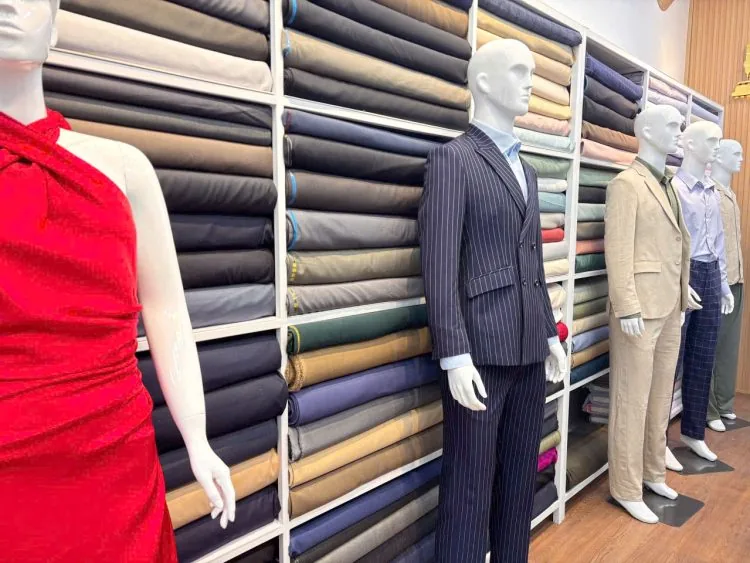
Fabric decides most of whether the suit is worth it. A wool blend with at least half wool holds a shape, resists creasing in a suitcase, and is the standard cloth for a good Hoi An suit. Pure wool drapes better and recovers from creases overnight; it is the right choice for a suit you will wear every week. A polyester-heavy cloth is cheaper and looks fine on the bolt; it shines after a few wears and is hot to wear. Ask for the composition, read the bolt end, and have it written on the receipt.
For a suit to wear in the tropics, consider linen or a lightweight wool. For a suit to wear at home in winter, a medium-weight wool blend is comfortable and travels well.
Decision two: the time
A suit needs two fittings: one after the jacket is assembled, one after adjustments. At Bao An both happen on the same day, so a suit ordered in the morning is collected that evening or the next morning. At most other shops the two fittings are spread over three to four days, and the famous 24-hour suit from a shop that fits once leaves out the second fitting, which is where the fit is finished. Ask how many fittings are included before you order, not after.
Bring the shoes and the shirt you will wear with it. Sit, raise your arms, put your hands in the pockets. The fitting checklist in the Hoi An tailor guide covers what to look at and in what order. If your dates are short, the fitting planner shows what fits.
Decision three: the shop
The shop decides whether the first two decisions are honoured. Look at a finished jacket inside and out before you order. Ask where it is sewn and who does the adjustments. Ask what construction they use and what the price difference is for anything better. Read reviews from the last three months with photos. The guide to How to choose a tailor in Hoi An and avoid tourist traps sets out the full check; it takes ten minutes.
When it is not worth it
If you have one day at a shop that fits once. A suit without a second fitting is a suit that fits someone roughly your size.
If you will only buy the cheapest cloth. The saving on fabric is small and the suit will show it.
If you need canvassed construction and the shop does not offer it. Either go to a shop that does, at the higher price, or accept fused and buy accordingly.
If you want a brand. A Hoi An tailor makes a suit in a cut you choose; it does not and should not make a labelled copy of anyone's.
When it is clearly worth it
A wedding suit, where made to measure matters and the budget is finite. A first proper suit, where you learn what fits you. A suit in a colour or cut you cannot find at home. A second and third suit once you have found a shop that fits you well, which is why so many visitors come back with the same measurements and a shorter list of questions.
About the shop behind this site
The suits on Hoi An Clothes Shop are made by Bao An Tailor, a mid-range shop with two ateliers in Hoi An. Ask the team the construction question directly; the Suits & waistcoats covers what they make, in which cloths, and how the fittings are planned.
FAQ
How much cheaper is a suit in Hoi An than at home?
A made-to-measure two-piece in a wool blend at a mid-range Hoi An shop costs a fraction of a made-to-measure suit in Europe, North America or Australia, and less than most off-the-rack suits of similar cloth. The saving is largest for made-to-measure, because that service is expensive at home and standard here.
Will a Hoi An suit last?
A suit in a decent wool blend with fused construction lasts years of occasional wear. For weekly wear, pure wool and half-canvas construction last longer and age better; ask whether the shop offers them.
Can I get a suit made for a wedding in Hoi An?
Yes, and wedding parties are a large share of suit orders. Send the date, venue and number of people before you arrive, allow a day for the fittings and a second as a margin, and ask for a package price.
What is the catch?
Fittings and fabric. You need two fittings, on the same day at Bao An or spread over three to four days at most other shops, and you need to choose a real wool or wool blend from the shelf, not whatever is cheapest. Visitors who skip either usually regret the suit; those who do neither usually come back for a second one.